Big Blue - Engine
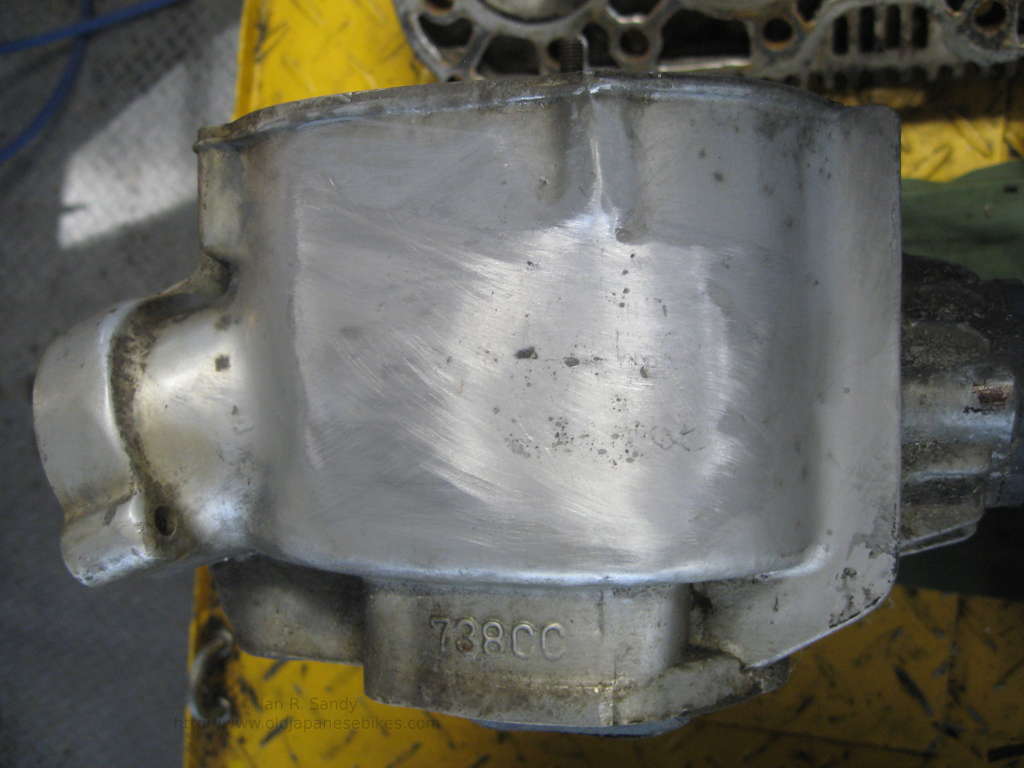
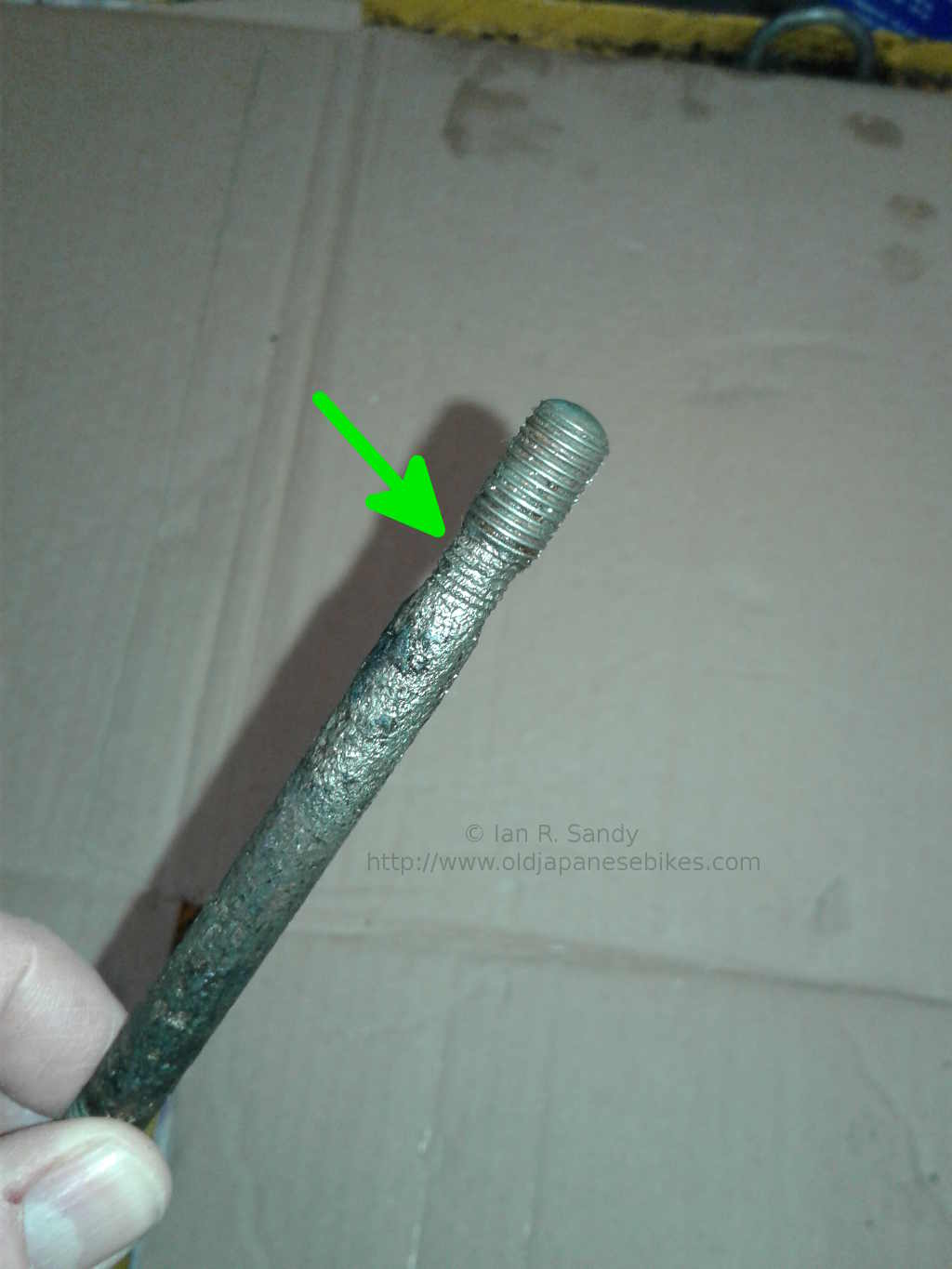
I was puzzled why the cylinder block was painted rather than polished. I would soon find that out, but first I needed to get the engine apart. That proved to be much more difficult than usual as the block was solidly seized to the studs. This is not unusual - what was unusual was just how long it took me to free it off as some several months of soaking and applications of heat did exactly nothing. In the end I was able to lift the barrels enough that I could saw off the one offending stud. Then followed several days efforts to remove the stuck bit of sawn off stud, and in the end I gave up. I stuck the block in a box and took it to Can-Am Machine and Tool here in London, Ontario to have the stud removed using spark erosion (EDM). I'd love to see exactly how it works, but needless to say, they did a perfect job: there is no new damage to the block and I have a perfectly clean hole where there should be one. Very clever process and while I hope not to need to rely on Can-Am too often it is good to know they do quality work.
And some people may be wondering why it is I hadn't cleaned the engine off before starting. Good question. If I were doing a repair I would clean it - as I'm stripping it down completely and will be washing each part once I have it in pieces I generally don't bother to clean these before hand.
Once I had the engine apart, I was surprised to see that it looked almost brand new internally.
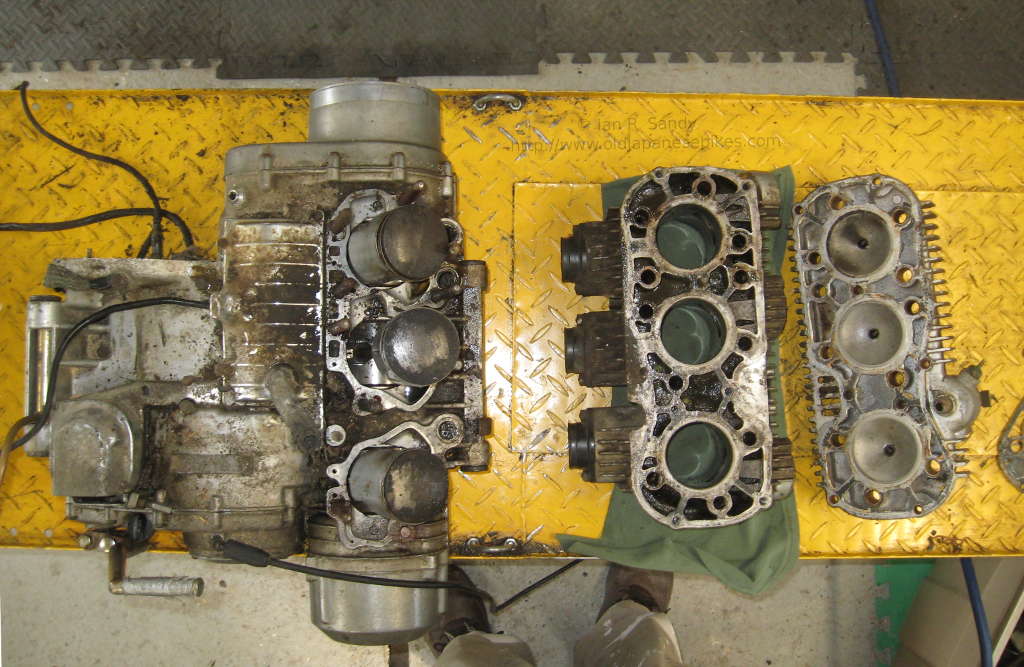
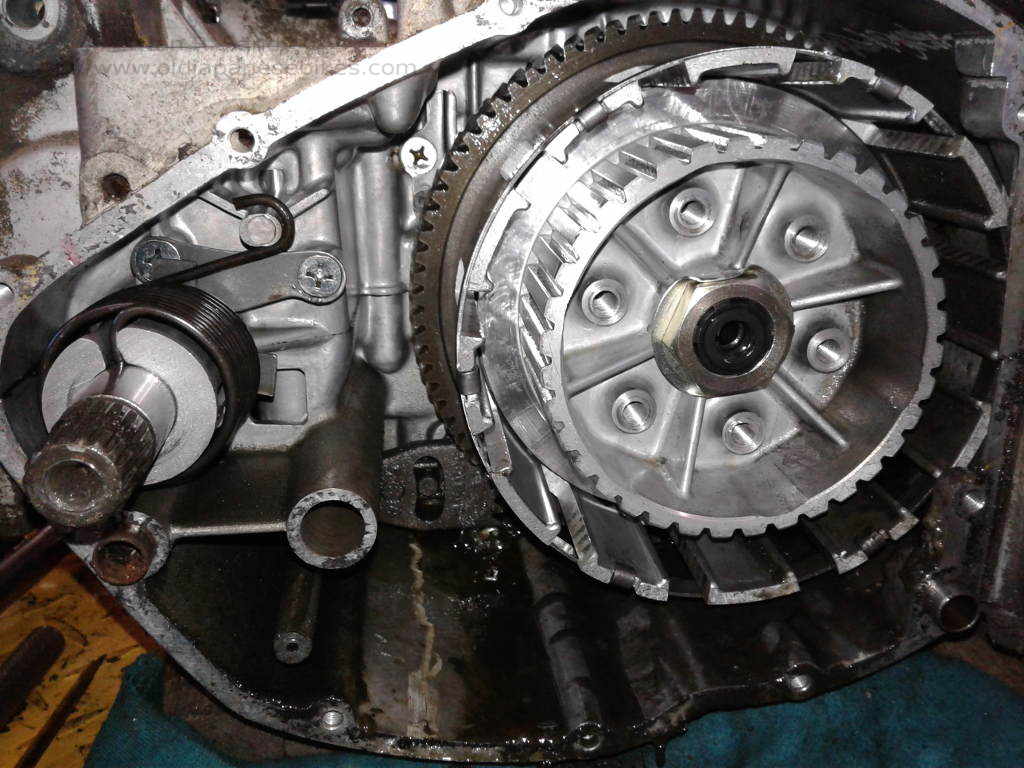
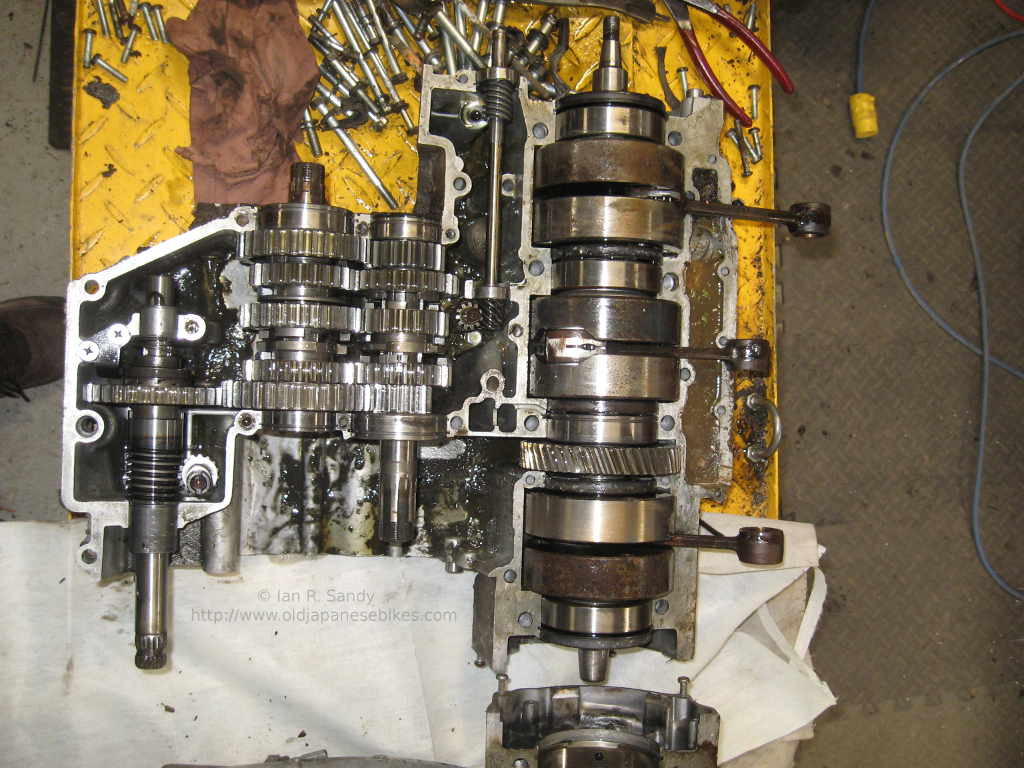
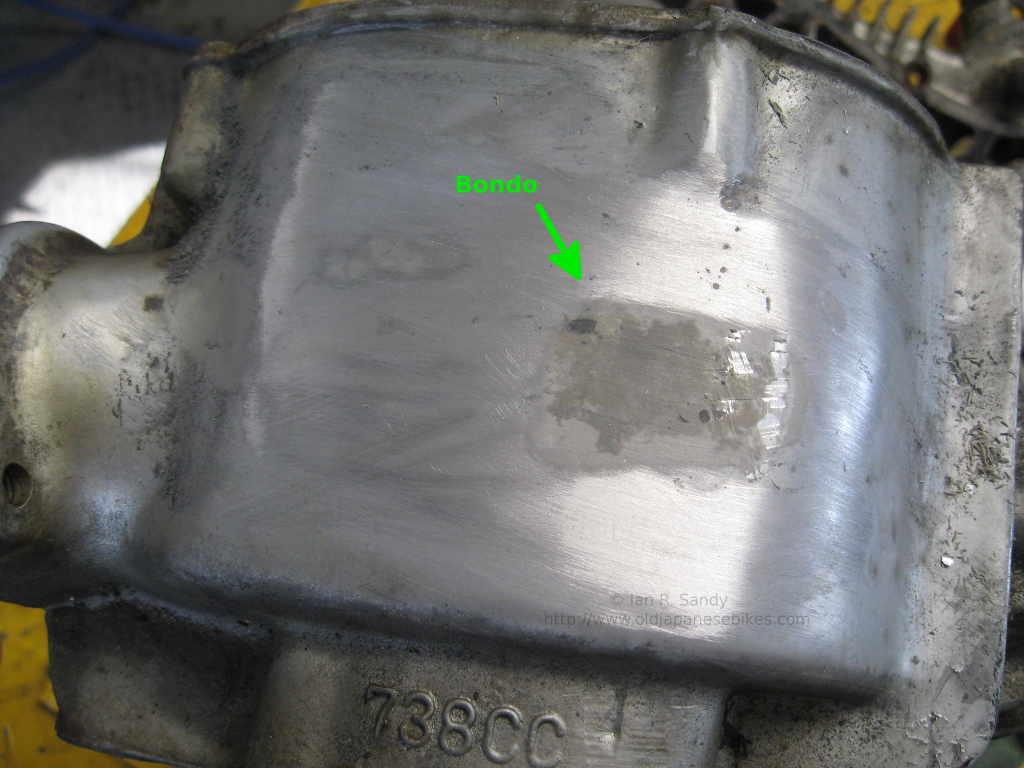
With the barrels off, I was able to take a closer look and found that they were painted to hide repair work done after a crash. The left side water jacket on the block had been welded up, and unfortunately had 'fizzed' the aluminium. To hide that, the area had been filled for Bondo and painted. Other than that problem, the rest of the block looked good, so I plan to clean it up and see how things look when they come back from being vapour blasted. The scars are a part of its history so if they show, so be it.
The original crankshaft has been put to one side and will likely go to the recycler as I prefer to use a later style crankshaft as used on the M/A/B. I discussed the reasoning behind this in the Oily Purple build and you can read about it here. I have a couple of rebuilt later style cranks on hand, done for me by Joe at RPM Services just south of Calgary. As I did on the last engine rebuild, the rest of the engine will be refreshed with updated parts (rebuilt water pump, clutch boss and bearing, new style clutch plates, new style sprag clutch, new shouldered engine studs, etc.).
As many of the engine studs were in very poor shape, I also replaced most of them from my stock of good spares.
I had the cases, head, block and wheel hubs (but not the brake plates) vapour blasted (also called vapour honing and aqua blasting). This work was done at Wolfe Worx here in London. It is worth having done if for no other reason than it peens the surface of the aluminium, and so makes it much easier to keep clean. Terry did a nice job and I just have to polish the bits that are supposed to be shiny.
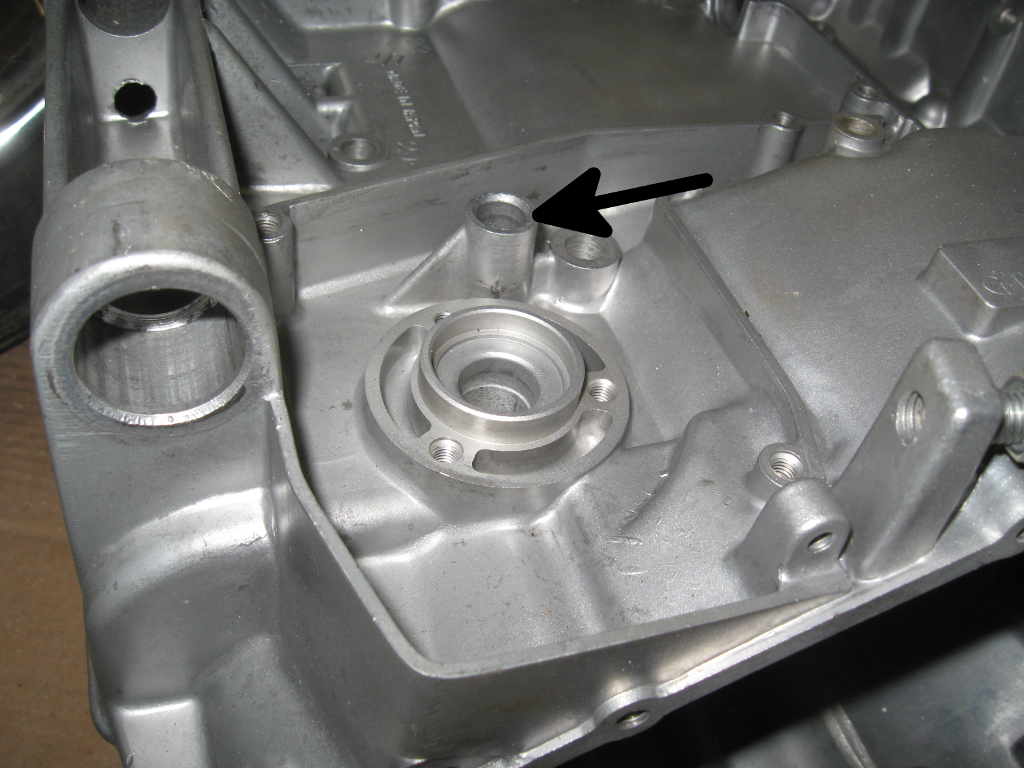
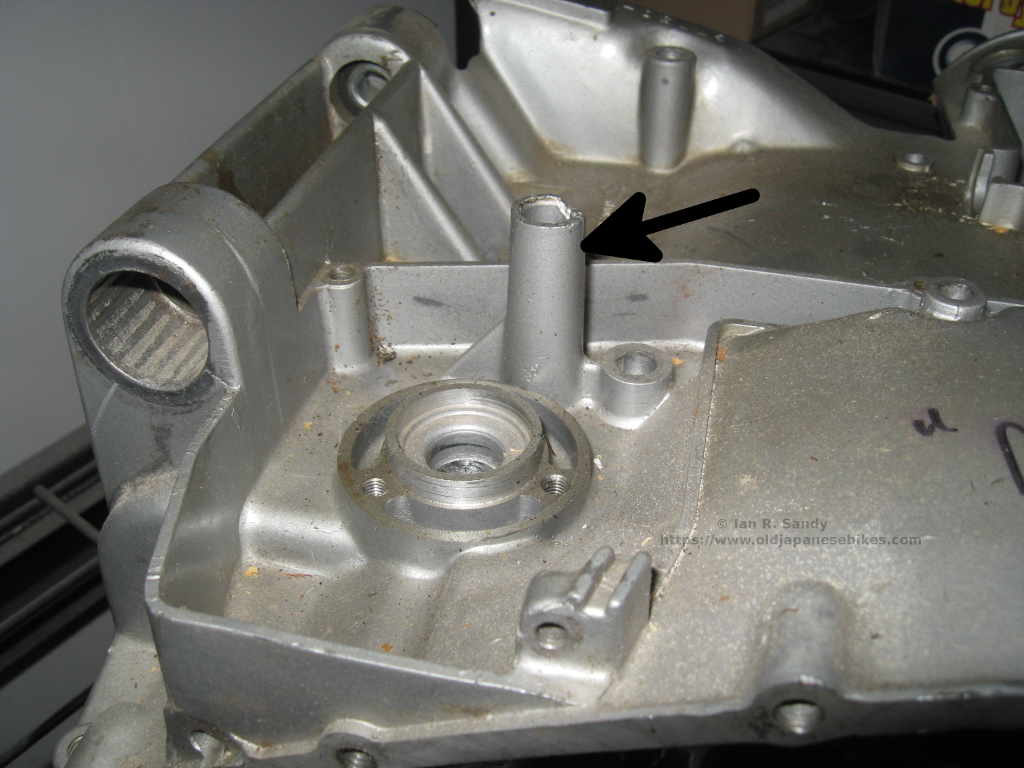
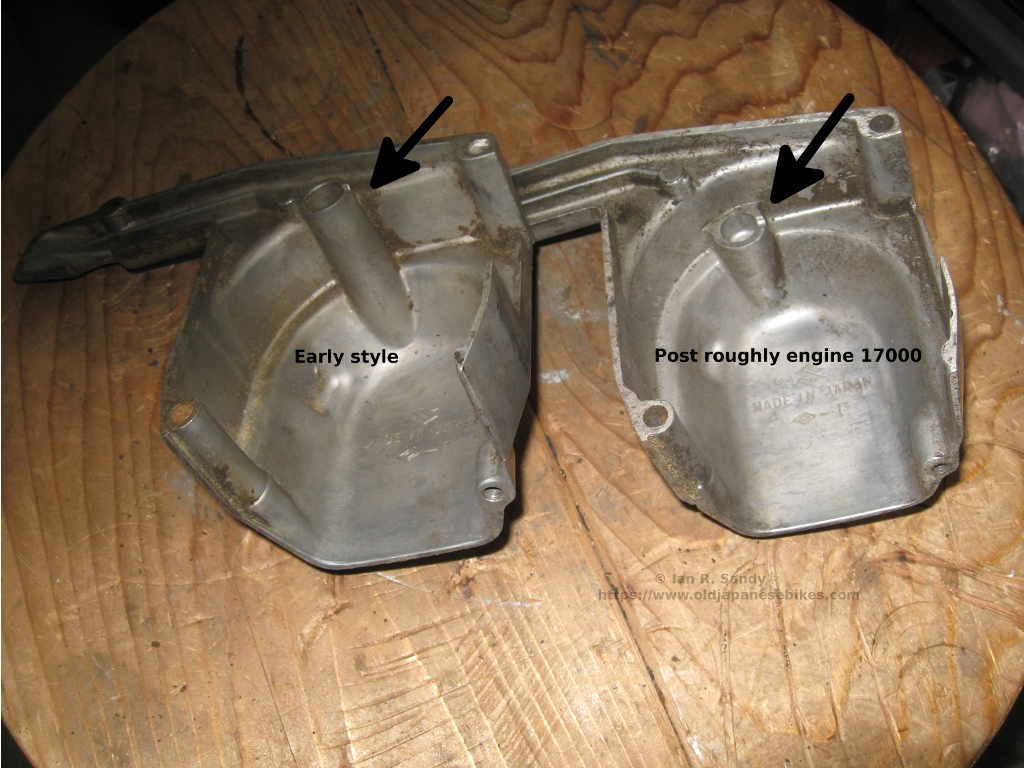
The early crankcase vents are different from later models. At this point, I'm not sure when they actually changed but suspect it was after engine #17000. As can be seen, in the left photo the early style vent is much shorter than the one seen in the middle photo. Likewise in the photo on the right, you can see that the oil pump cover for the early crankcase vent will not fit later style cases as the extension is too long for it to fit.
Previous, Next